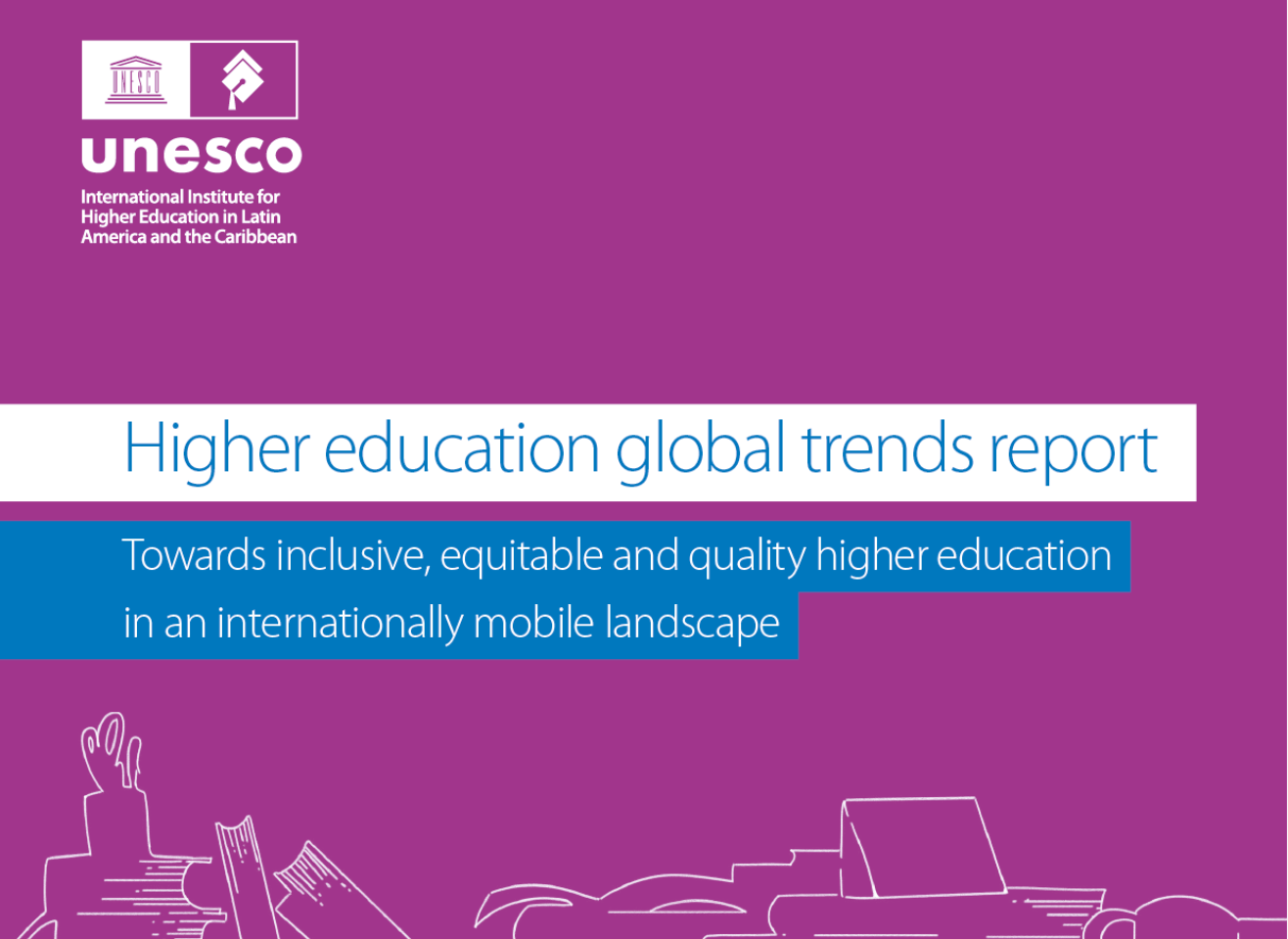
UNESCO IESALC’s inaugural “Higher education global trends report” reveals what those working directly in the field already know: despite historic enrollment growth, higher education remains plagued by structural inequalities that undermine its potential as a driver of sustainable development. While 269 million students are now enrolled globally, up from 100 million in 2000, access, completion, governance, and quality continue to be distributed profoundly unequally across regions and populations.
In Latin America and the Caribbean, the challenges are particularly acute. Although the region has achieved a gross enrollment ratio comparable to the global average, only 46% of countries in the region report higher education statistics to UNESCO, the second-lowest reporting rate globally after sub-Saharan Africa (27%). This data gap severely constrains evidence-based policymaking and institutional planning. Furthermore, despite progress in gender parity at enrollment level, women in Latin America still represent only 52% of doctoral students and hold a minority of senior academic leadership positions, mirroring a global pattern where structural barriers persist even as access expands.
The report identifies a critical governance vacuum in emerging technologies: by 2025, only one in five universities worldwide has established a formal policy on Artificial Intelligence. This leaves 80% of institutions, including the majority across Latin America, without frameworks to guide responsible innovation, ethical AI deployment, or strategic integration of these transformative technologies into teaching, research, and administration. This gap represents not merely a technical challenge but a fundamental risk to institutional capacity and academic relevance in an increasingly technology-driven landscape.
Beyond regional inequalities, the report highlights populations systematically excluded from higher education opportunities. Only 9% of refugees worldwide access higher education, and academic freedom has regressed to levels not seen in 50 years. International student mobility, while having tripled to 7.3 million students, remains accessible to fewer than 3% of the global student population, an elite phenomenon that reinforces rather than challenges existing privilege structures.
At The FuturED Institute, our work responds directly to these structural gaps. Through international programmes, scholarship initiatives focused on underserved populations, and academic partnerships that bridge Europe and Latin America, we address the precise challenges UNESCO’s report identifies: inadequate institutional capacity, limited access for displaced and marginalized populations, insufficient regional cooperation frameworks, and governance deficits in emerging technology areas. These are not abstract policy challenges, they are barriers preventing millions of capable individuals from accessing transformative educational opportunities.
Higher education can be an engine for sustainable development, social mobility, and international cooperation, but only when access is genuinely inclusive, governance structures are robust, institutional capacity is strengthened, and quality standards are upheld universally. The expansion UNESCO documents must be accompanied by the systemic transformation this sector urgently requires.
Access the full UNESCO IESALC report here:
👉 https://unesdoc.unesco.org/ark:/48223/pf0000398121.locale=en